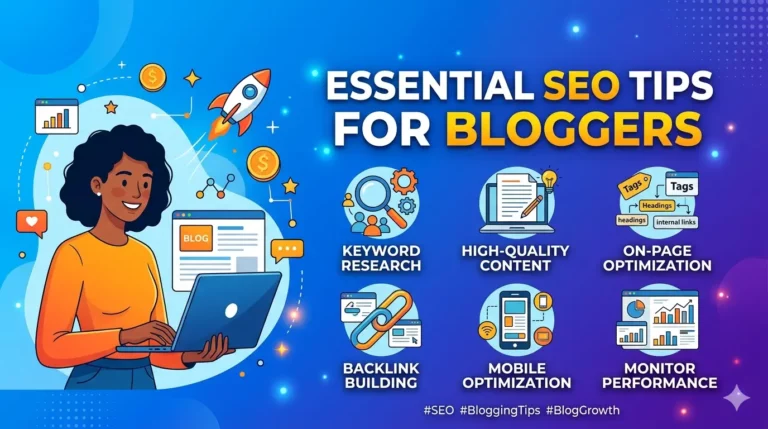
Most beginners get zero traffic for one reason: they published content nobody was searching for. The writing was fine and the effort was real. The posts just had no matching question typed into Google, so nobody was ever sent to them.
That is fixable, and this article gives you one repeatable method for it. You will find the questions buyers type into Google, sort them by how close those people are to buying, and turn each one into a post built to earn clicks and affiliate commissions. This is search driven content strategy for beginners, and you can start it today.
Why your last 20 posts got zero traffic (and it was not your fault)
If you have published a pile of posts and watched your traffic stay flat, one of these four causes is almost certainly behind it. Most people who follow make-money-online programs fall into the first one.
You wrote about topics, not searches. “Affiliate marketing tips” feels like a topic. But nobody sits down and types that. People type specific questions and phrases, like “how do I pick an affiliate niche” or “best keyword tool for a new blog.” A post has to match something a real person types, and a general topic rarely does.
You picked keywords with no way to win. Some phrases are dominated by huge sites with years of authority. A brand new site publishing a post for one of those is unlikely to appear on the first page. A beginner needs narrower, more specific phrases where the competition is thinner.
You targeted searches that never lead to a purchase. Plenty of searches bring readers who want a definition or a quick fact and then leave. Those readers can still show up in your analytics, but they rarely click an affiliate link.
Your posts stood alone. Twenty unrelated posts tell Google very little about what your site is about. Twenty posts that cover one subject from many angles tell it a lot.
Many programs teach you to “just create content” and “be consistent.” Consistency matters, but consistently publishing posts nobody searches for gets you consistent zero. The method below replaces guessing with a process, and every post you write from now on has a reason to exist.
Search intent in plain English: the 3 types of searches that matter for affiliate income
Search intent is the reason behind a search. Two people can type similar words and want completely different things. If you understand intent, you know what each post should look like before you write a word.
For affiliate income, three types matter.
Informational searches
The searcher wants to understand something. Examples: “what is affiliate marketing,” “how does keyword research work,” “how to start a blog.”
These readers are early. They are not ready to buy, but they are a great way to introduce your site, build trust, and earn the right to recommend things later. Informational posts bring in the widest audience and the smallest direct commissions.
Commercial investigation searches
The searcher is comparing options and getting close to a decision. Examples: “best email marketing platform for beginners,” “keyword research tools compared,” “best AI tools to make money online.”
This is where a lot of affiliate income comes from. The reader has already decided to buy something and is choosing which one. A clear, honest comparison from you can decide it for them.
Transactional searches
The searcher is ready to act. Examples: “email marketing platform free trial,” “[product name] pricing,” “[product name] sign up.”
These are the closest to a sale. Volume is usually lower, but readers arrive with a credit card nearly in hand. A review post that answers their last few questions can convert very well.
Keep a simple mental rule: informational posts earn trust, commercial posts earn most of the commissions, and transactional posts catch the people about to buy. A healthy site has all three, with extra weight on the second and third.
Find your first 30 keywords in one sitting using free tools
You do not need paid software to build a first list. Set aside a couple of hours, open a spreadsheet, and work through the following sources. Your goal is 30 phrases that real people type, all related to one subject.
Google autocomplete. Type the start of a phrase related to your niche and read the suggestions that drop down. Those suggestions come from what people actually search. Try the start of a question: “how to,” “best,” “can you,” “is it worth.” Write down every suggestion that fits your site.
People Also Ask. Search a core phrase and look at the expandable question boxes in the results. Click one and more questions appear. Each question is a possible post, and the answers show you what Google already considers helpful.
Related searches. Scroll to the bottom of the results page. The related searches there are another list of phrases people use around the same subject.
Forums and question sites. Browse communities where beginners ask for help. Note the exact words they use in their questions. Their wording is often better than anything you would come up with yourself, because it is how a stuck beginner describes their own problem.
Free keyword tools. Google’s Keyword Planner is free with an account, and several other tools offer limited free searches. Use them to check whether a phrase gets searched at all and to find variations you missed. Treat the numbers as rough guidance, since free tools give estimates rather than exact counts.
As you collect, stay inside one subject. If your site covers making money online, choose one corner of it first, such as affiliate marketing for beginners, free tools for earning online, or building a first email list. If you are still choosing a niche, the guide on the most lucrative niches for blogging can help you narrow it down before you build the list.
Aim for specific phrases with several words. “Best free keyword research tool for a new affiliate site” is a far better target than “keyword research.” The longer phrase has fewer competitors and a clearer reader.
Sort keywords by buying intent: which ones make money and which ones just make noise
Now you have 30 phrases in a spreadsheet. Add three columns: intent type, product fit, and difficulty guess.
Intent type. Label each phrase informational, commercial, or transactional. Look at the words. “What is” and “how to” usually signal informational. “Best,” “vs,” “review,” and “compared” signal commercial. “Pricing,” “free trial,” “discount,” and “sign up” signal transactional.
Product fit. Ask whether you can honestly recommend something that solves this searcher’s problem. If a phrase has no natural product or program attached, it can still work as an informational post, but it will not earn commissions directly. If a phrase pairs naturally with something you can recommend, mark it as a priority. Pairing your commercial posts with programs that pay well matters too, and the guide to high ticket affiliate programs for beginners is a good place to look for options.
Difficulty guess. Search the phrase yourself and look at page one. If it is filled with giant, well-known sites, mark it hard. If you see small sites, forum threads, or thin pages, mark it easier. This is not exact science, but it stops you from spending a week on a post with no chance.
Then sort your list. Your first posts should be the phrases that are commercial or transactional, have a product you can recommend, and show easier competition. Those are the ones that make money. Phrases that are informational, broad, and difficult are the noise, at least for now.
One more filter: pick phrases where you can give the reader something useful. If you have not used a product, say so plainly in your post and stick to what you can verify from the product’s own information. Readers and search engines both respond better to honest, specific content.
Build a topic cluster so Google sees you as the go-to site in your niche
A topic cluster is a group of posts that cover one subject in depth, linked together. It has one main post, often called a pillar, and several supporting posts that each answer a narrower question.
Say your subject is building a first affiliate income stream. Your pillar might be a complete beginner guide to affiliate marketing. Supporting posts could cover:
- How to choose an affiliate niche
- Free tools for researching keywords
- How to compare affiliate programs
- Which email platform suits a beginner
- How to read your site’s search results
Each supporting post links to the pillar and to related supporting posts. The pillar links back out to each of them. A reader who finishes one post always has a next logical post to read, so they stay on your site longer, and search engines can see how your pages relate.
Clusters work because they show depth. A site with ten connected posts about one subject looks more like a resource than a site with ten scattered posts. This also solves the fourth cause of zero traffic from the first section.
To build yours, take your sorted list and group the phrases by sub-topic. Choose one group as your starting cluster, with one broad phrase for the pillar and the rest as supporting posts. Finish that cluster before you start a second one.
Link posts to each other where a reader would actually benefit. If you cover email in one post, link to your comparison of email platforms. The best email marketing platform for beginners guide is an example of the type of supporting page that fits into a cluster about building an income stream. Use natural anchor text that describes what the reader will find.
Write each post to match what the searcher wants, step by step
A post ranks and converts when it gives the searcher what they came for, quickly. Use this process for every post.
- Search your target phrase and study page one. Note the format of the top results. Are they lists, comparisons, how-to guides, or reviews? That format is a strong hint about what searchers want. Match it, then make yours more useful.
- Write a title that contains the phrase and promises the outcome. Put the target phrase near the start where it reads naturally. Make the benefit clear.
- Answer the main question early. The first few paragraphs should tell the reader the answer or the shape of the answer. Do not make them scroll through a long introduction. Readers who find what they need stay and read the rest.
- Use headings that mirror real questions. Your People Also Ask research gives you the subheadings. Each H2 should cover one question or comparison point, with a direct answer underneath.
- Add the product recommendation where it fits the reader’s decision. In a commercial post, that means a clear comparison with honest pros and limitations for each option. In a transactional post, it means answering the final doubts, such as what is included, who it suits, and who should skip it. Place your affiliate link where the reader has just been given a reason to click, and disclose it clearly.
- Finish with a next action. Tell the reader what to do now, whether that is trying a tool, reading a related post, or signing up.
- Link to your cluster. Add links to the pillar and to one or two related posts before you publish.
Keep paragraphs short, use lists where they make comparison easier, and write the way you would explain things to one person. A post that reads clearly beats a post that sounds impressive.
For informational posts, the goal is the same, but the ending changes. Instead of pushing a purchase, point the reader to the commercial post that comes next in their journey. A reader who learns what affiliate marketing is will soon be asking which tools to use, and your next post should be there.
Your 30-day publishing plan, plus how to read the results and double down
Here is a plan you can follow. Adjust the pace to the time you really have, because a plan you can sustain beats a plan you abandon in week two.
Days 1 to 3: Research and sort. Build your list of 30 phrases, label them, and choose your first cluster.
Week 1: Commercial posts first. Publish two or three commercial or transactional posts from your top-priority list. These carry your earliest commission potential.
Week 2: The pillar. Write and publish your pillar post. Link it to the posts from week one and update those posts to link back.
Week 3: Supporting informational posts. Publish two or three posts that answer the early-stage questions in your cluster, each linking to the relevant commercial post.
Week 4: Fill gaps and tighten. Publish one or two more supporting posts, then go back through everything and check that the links between posts work and the titles match the phrases you targeted.
If you can only manage one post a week, run the same order over a longer stretch. The order matters more than the speed.
How to read the results
Connect your site to Google Search Console, which is free. It shows you which phrases your pages appeared for, how many times people saw them, how many clicked, and your average position.
Rankings take time, so judge the first weeks by impressions rather than clicks. Impressions rising means Google has started showing your pages. Look at these signals:
- Impressions but few clicks: The page appears but the title or description is not convincing. Rewrite the title to make the benefit clearer.
- Position on page two: The post is close. Improve it by answering more of the questions people ask and adding links from your other posts.
- Clicks but no affiliate clicks: Your post attracts the right readers but the recommendation is in the wrong place or not clear enough. Move it closer to the point where the reader makes the decision.
- A post that gets clicks and commissions: This is your signal to do more of the same. Find the related phrases, build supporting posts around it, and expand that cluster before you start a new one.
Doubling down means putting your next posts where the evidence points. If one cluster earns attention, build it out. If a type of post gets nothing after you have given it time and a fair rewrite, stop making that type.
This process runs in a loop: research, sort, publish, read, repeat. Each pass gives you better data on what your audience wants, and your list of phrases grows from your own results rather than guesses.
You now have the whole method. Pick one corner of your niche, collect your 30 phrases, and sort them before you do anything else. You will know what to write next, and every post will have a reader searching for it.
Ready to stop guessing? Start free with Wealthy Affiliate, where you get keyword research, training and a site builder in one place, and put this method to work on your own site today.